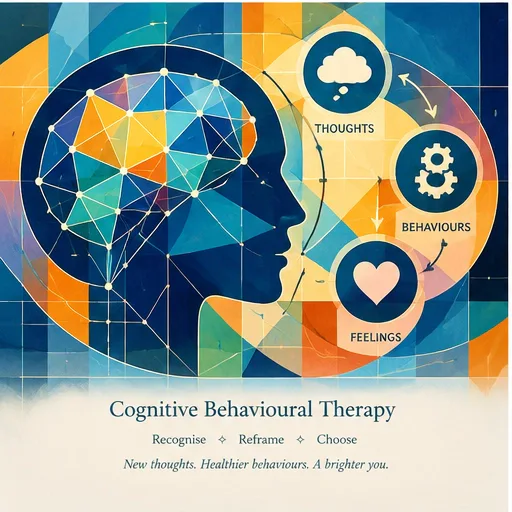
Cognitive Behavioural Therapy
Understand the patterns that make difficult moments harder
When worry takes over, a small event can lead to a long chain of thoughts, feelings and reactions. You might replay a conversation, avoid something important, or feel caught in habits that offer short-term relief but leave you struggling afterwards. Making sense of that pattern can be a useful place to begin, without judging yourself for how you have been coping.
Cognitive Behavioural Therapy, usually called CBT, explores connections between situations, thoughts, emotions, physical feelings and actions. It offers a structured way to examine these connections and consider different responses. This involves looking at thoughts fairly and testing what helps in real situations. It is more than trying to think positively. Your experiences, the context of a difficulty and the practical demands of your life all deserve attention.
The NHS guide to CBT provides a general overview of what the approach involves.