
Cognitive Behavioural Therapy

Understand the patterns that make difficult moments harder

When worry takes over, a small event can lead to a long chain of thoughts, feelings and reactions. You might replay a conversation, avoid something important, or feel caught in habits that offer short-term relief but leave you struggling afterwards. Making sense of that pattern can be a useful place to begin, without judging yourself for how you have been coping.

Cognitive Behavioural Therapy, usually called CBT, explores connections between situations, thoughts, emotions, physical feelings and actions. It offers a structured way to examine these connections and consider different responses. This involves looking at thoughts fairly and testing what helps in real situations. It is more than trying to think positively. Your experiences, the context of a difficulty and the practical demands of your life all deserve attention.

The NHS guide to CBT provides a general overview of what the approach involves.
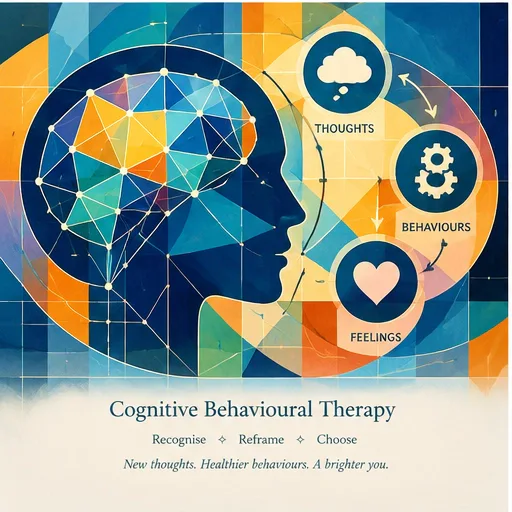
Colourful illustration representing the connections between thoughts, emotions and behaviour.

What we might explore

  • Recognising thoughts and habits that keep a particular difficulty going.
  • Considering more balanced interpretations of challenging situations.
  • Building practical responses you can try and review at your own pace.

What sessions may involve

If we agree that CBT is appropriate, we might look closely at a recent difficult moment and map what you thought, felt and did. Together, we could identify a manageable activity or experiment to try between sessions, then discuss what you noticed. A worksheet or diary may help, but the purpose would be to understand your experience and develop useful skills. We would review how the approach is working for you.

If physical tension or bodily responses are part of what you notice, you may also want to read about somatic therapy. Solution-focused therapy offers another way to explore practical next steps.

Will I be told that my thoughts are wrong?

I would approach your thoughts with curiosity and respect. We might consider the evidence for a thought, alternative explanations and its effect on your actions, without dismissing the circumstances you are facing.

Talk about what you need

Get in touch to discuss your concerns and whether this approach may suit you. I’m Alan Jones, a qualified counsellor. You can learn more about me and my approach on the About Alan page.

Enquire about counselling Get to know Alan

Back to services

Chat on WhatsApp